For families in India’s rural Tansa Valley, getting medical care can mean a long journey. A clinic may be far from home, transportation may be unavailable or unaffordable, and poor road conditions can make travel difficult. When someone feels unwell, these barriers can stand between them and an examination, medication, or a referral for further care.
PRASAD Chikitsa’s Mobile Hospital brings essential healthcare directly to rural villages in Maharashtra. Since its launch in 1978, this mobile healthcare program has helped people in remote communities receive free medical care closer to home. For an older adult with a persistent rash, a woman seeking support for menstrual health, or someone who needs diabetes screening, a visit can be a practical first step toward addressing a health concern.
Mobile Hospital at a glance
- Location: Tansa Valley, Maharashtra, India
- Launched: 1978
- Who it serves: Rural and Adivasi communities with limited access to healthcare
- Schedule: Six days a week, at two locations each day, serving twenty villages
- Reach: About 1,690 unique beneficiaries and about 3,576 visits per year, on average.
- Referrals: PRASAD Chikitsa Medical Centre and eye surgery camps
Rural healthcare closer to home in the Tansa Valley
The Mobile Hospital serves rural communities in the Tansa Valley of Maharashtra, India, including Adivasi communities. Many residents face financial hardship as well as limited access to healthcare. Even when medical services exist elsewhere, the cost and effort of reaching them can make seeking care difficult.
By bringing healthcare into the village, the program reduces the need to arrange transportation or travel long distances for basic services. Residents can speak with a healthcare professional and receive treatment close to home.
PRASAD strengthens local communities by providing the resources and support needed to foster long-term, sustainable community development. Through initiatives such as the Mobile Hospital, we combine essential medical services with community-based programs that promote health, well-being, and lasting improvements in quality of life.
A mobile hospital serving remote villages since 1978
PRASAD Chikitsa is proud to be one of the first nonprofit healthcare organizations to deliver mobile healthcare in India. Launched in 1978, the mobile hospital is one of PRASAD’s earliest community healthcare initiatives, built around the need to reach people who live far from medical facilities.
Over the decades, the program has reached more than one million people in remote villages. Its history reflects a continuing need for accessible medical care in rural India, and its vehicle brings services to communities where a routine trip to a distant clinic may be hard to manage.
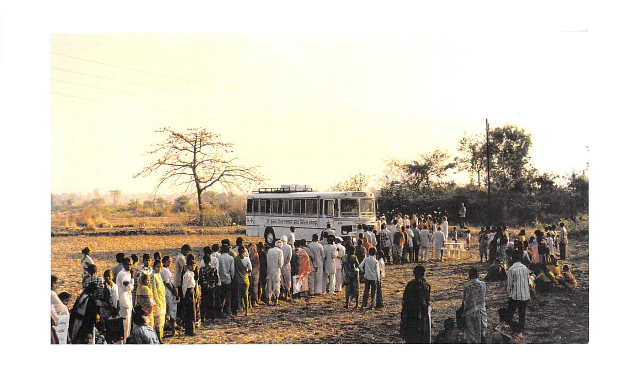
The Mobile Hospital serving villagers in 1978
How the Mobile Hospital works
The Mobile Hospital operates six days a week, serving twenty villages with healthcare at two locations each day. Each visit combines medical examination, treatment, health education, and referrals, so patients receive the care they need. A visit can address an immediate concern and also help identify underlying conditions that may need further evaluation and follow-up.
Free medical services in the villages
The Mobile Hospital offers free medical screenings, diagnosis, and treatment, along with essential primary-level medications. Health check-ups let the medical team assess symptoms and determine appropriate care. Some blood tests and treatments are performed onsite. Patients who need further diagnostic services or specialized care are referred to the PRASAD Chikitsa Medical Centre.
Services include:
- First aid and basic medical care
- Treatment for common conditions, such as skin infections
- Screening and care for chronic illnesses, including diabetes, hypertension, tuberculosis, malnutrition, and heart disease
- Referrals to specialist when needed
Together, these services connect a patient’s immediate concern with their wider health needs.
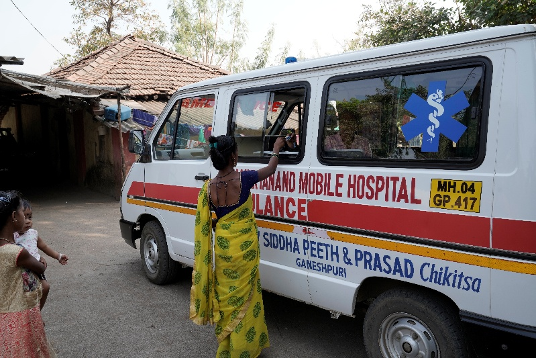
The Mobile Hospital vehicle brings medical services directly to rural villages
Health education is also part of the program. Alongside medical care, patients can receive guidance relevant to their health concerns.
Patient story: Kamal finds relief
Kamal, a 74-year-old resident of Adne, had experienced itching and a rash on her back for two months. She had tried over-the-counter medications from local pharmacies, but the discomfort continued.
At the Mobile Hospital, the doctor examined Kamal and diagnosed a fungal skin infection. She was prescribed medicines and ointment. The visit also included screening for hypertension and diabetes; neither condition was identified in those screenings.
Kamal’s story shows the value of a medical examination when self-treatment has not helped. The consultation gave her a diagnosis and a treatment plan for a concern that had lasted weeks, and the same visit let the team check other aspects of her health.
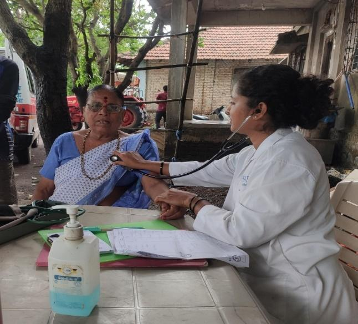
A patient receives a medical examination from a doctor during a village visit
Patient story: Parvati receives treatment and nutrition advice
Parvati, a 73-year-old resident of Dakivali, visited the Mobile Hospital after experiencing dryness of her tongue for two weeks. The symptoms concerned her, and she wanted medical advice.
During her visit, Parvati received an examination and treatment with multivitamins. She was also given dietary advice to help prevent nutritional deficiencies.
Her experience highlights another role of accessible primary care: giving people a place to ask questions about symptoms and receive guidance. For residents who face transportation barriers, having that opportunity in their own community can make seeking advice easier.
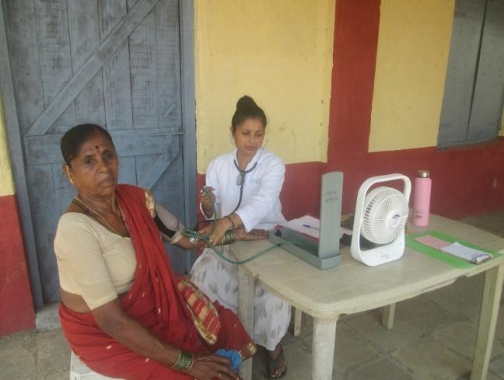
A patient has her blood pressure checked during a Mobile Hospital village visit
Frequently asked questions about the Mobile Hospital
What is a mobile hospital?
A mobile hospital brings healthcare professionals and medical services to communities using a vehicle. PRASAD Chikitsa’s Mobile Hospital travels to rural villages to provide examinations, screenings, basic treatment, medications, health education, and referrals.
Where does the Mobile Hospital operate?
It serves rural communities in the Tansa Valley in Maharashtra, India, including Adivasi communities. The program operates six days a week and serves twenty villages.
What conditions does the Mobile Hospital screen for and treat?
The team provides first aid, basic medical care, and treatment for common conditions and cares for chronic illnesses, including diabetes, hypertension, tuberculosis, malnutrition, and heart disease.
Why is mobile healthcare important in rural India?
For the communities served by this program, distance, transportation costs, and poor road conditions can make reaching a clinic difficult. Village visits reduce some of these barriers and help residents access basic medical care closer to home.
What happens when a patient needs additional care?
Patients who need specialized treatment or further diagnostic services are referred to the PRASAD Chikitsa Medical Centre. Referrals to eye surgery camps are also provided when needed, connecting village care with additional services.
How can I support the Mobile Hospital?
Donations help support medical care, essential medications, and community outreach for rural villages. You can donate to support our programs in India through the PRASAD donation page to help keep this program available.
Help bring healthcare to rural India
The Mobile Hospital depends on financial support. Donations help provide medical care, essential medications, and the community outreach that make village visits possible. Your support helps keep this longstanding program available to people who face barriers to healthcare.
Help families in the Tansa Valley receive care closer to home. Donate to support PRASAD’s mobile healthcare work in rural India and help patients like Kamal and Parvati get the medical attention they need.